
Part II in the Dream POCUS Device series

The Probe That Doesn't Exist Yet
Part II in the Dream POCUS Device series
Every current POCUS handheld ships with the same set of assumptions built in: a proprietary display, a fixed probe head, a cloud dependency for the AI, a body shape optimized for one grip out of the four you actually use. Almost none of those decisions were made because the physics required it. They were made because they protected the vendor's margin.
Redesign the object from a working community clinician's perspective and you don't get a slightly better handheld. You get a different device. Modular probe heads. Onboard cellular. AI that runs on the probe itself. A small screen on the probe body so your eyes stay in the scanning plane. Grip zones designed by someone who's actually scanned for eight hours in a row. A wall dock that decontaminates the probe between patients and logs every cycle.
Six features. One argument. None of them are physics problems.
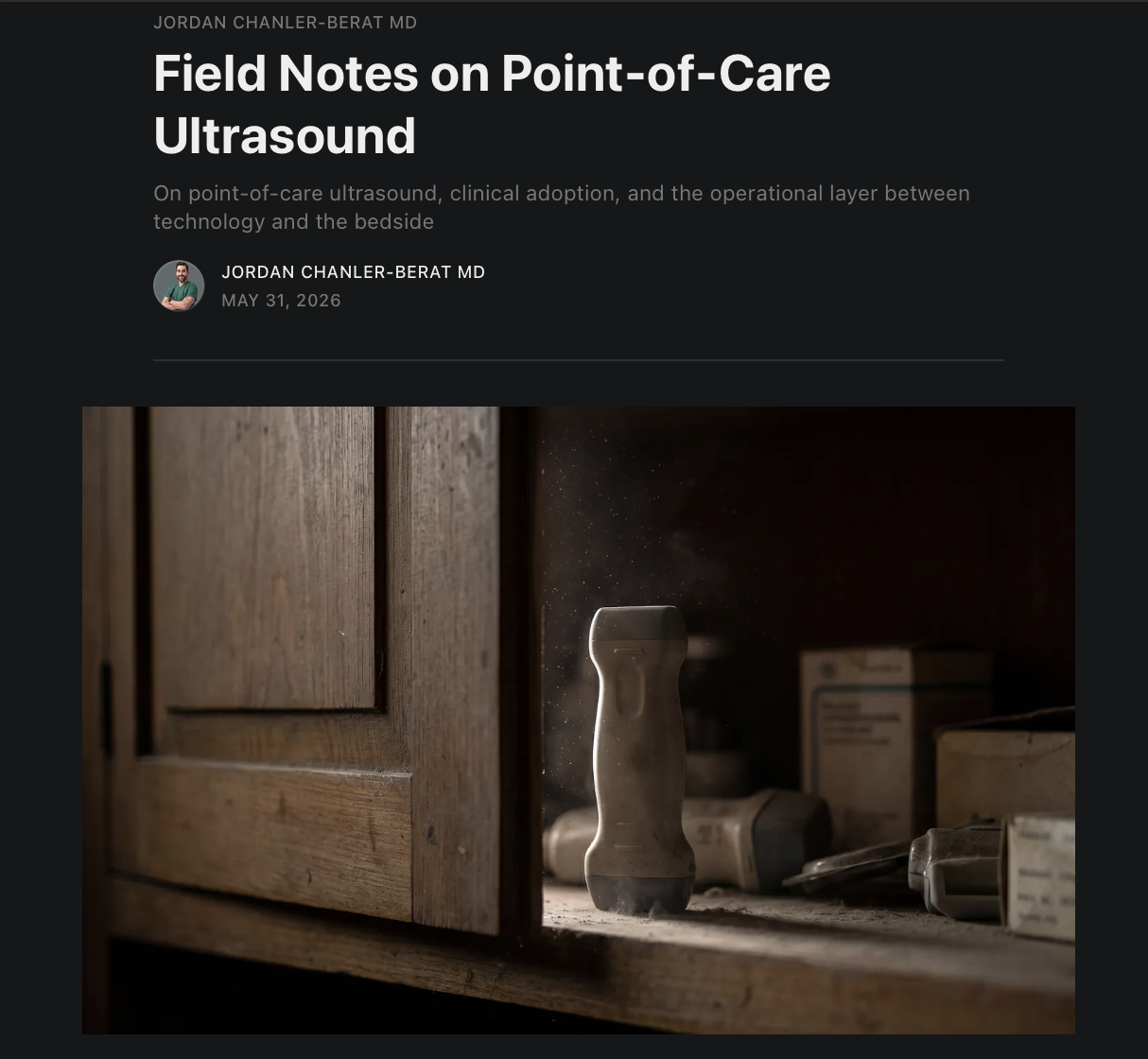
Field Notes on Point-of-Care Ultrasound: Substack Essay
The Cabinet
Field Notes · June 2026
A few years ago I walked through a clinic and noticed a brand-new high-end wireless handheld ultrasound — the kind of device a sales rep would happily put on a glossy one-pager — sitting in a locked cabinet. It had been there for months. Staff had been trained. The clinic had paid for it. Nobody was using it.
The reasons were small, individually unremarkable, and collectively fatal. The log-in workflow took too long. Documentation was clunky. Billing wasn't set up. The interface was intimidating for clinicians who hadn't grown up with ultrasound — too many menus, no easy way to toggle between exam types in the rhythm of a busy clinic. So the probe stayed in its cabinet, and the staff went back to the way they'd practiced medicine the week before the device arrived.
I think about that locked cabinet often, because it's a more honest picture of where point-of-care ultrasound actually is in 2026 than the picture the field tells itself.
[Continue reading on → Field Notes on Point-of-Care-UItrasound ]
I joined Kelly and Lalita to talk through all things point-of-care ultrasound — how clinicians can build the skill later in their careers, where it's most useful in primary care, and why the tools are worth adopting. We also got into the AI-augmented future of imaging and how POCUS can help democratize access to diagnostic care.
On the POD: On POCUS, Primary Care, and the AI-Augmented Future of Imaging
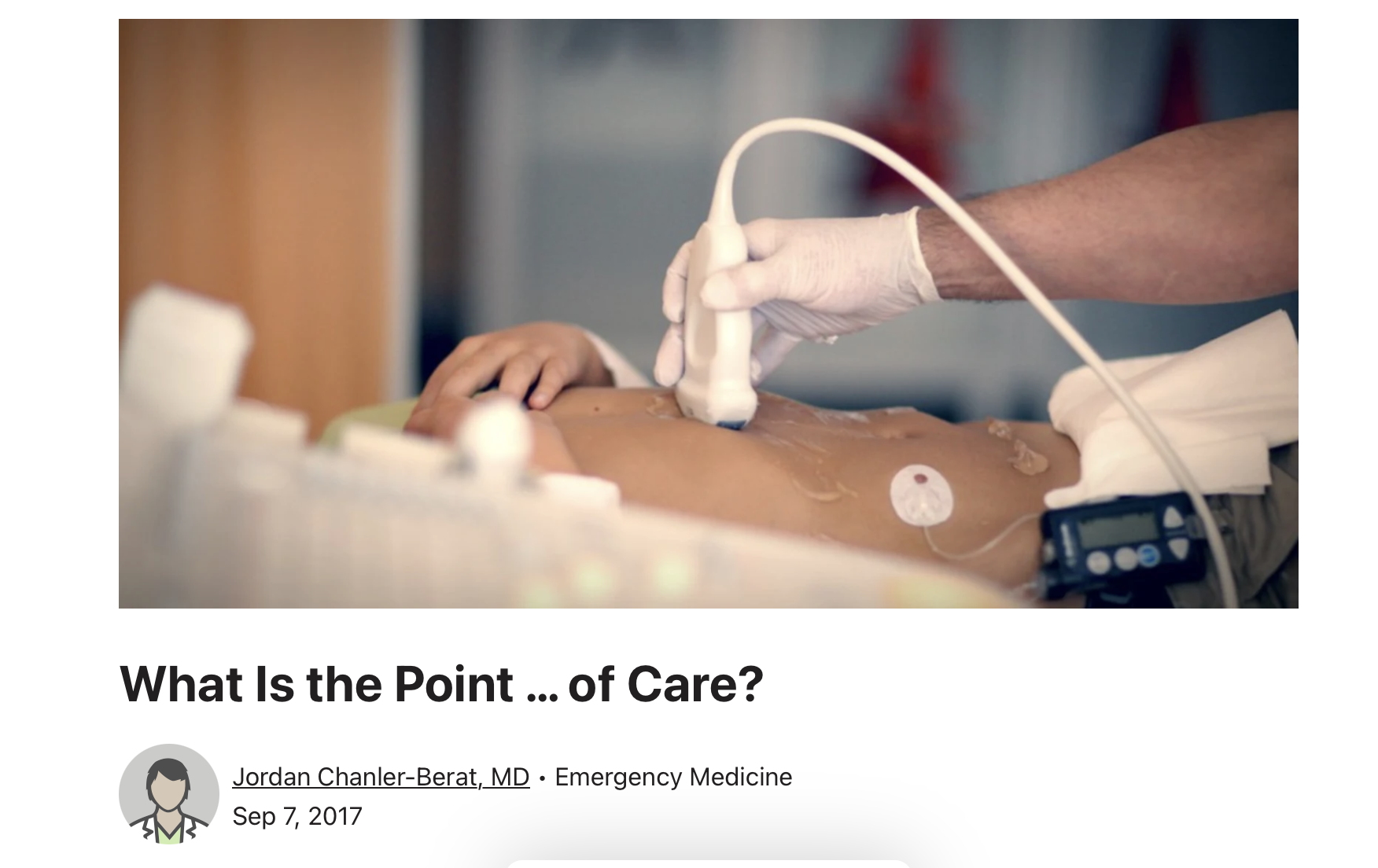
Essay in Doximity Op-Med: How a probe at the bedside rebuilds a connection technology eroded
On the dual meaning of "point of care" — the literal probe on the patient and the figurative reason we practice medicine at all. The essay makes the case that bedside ultrasound restores a doctor-patient connection that modern technology has pushed aside.